Choosing Between Rechargeable and Battery-Powered Hearing Aids
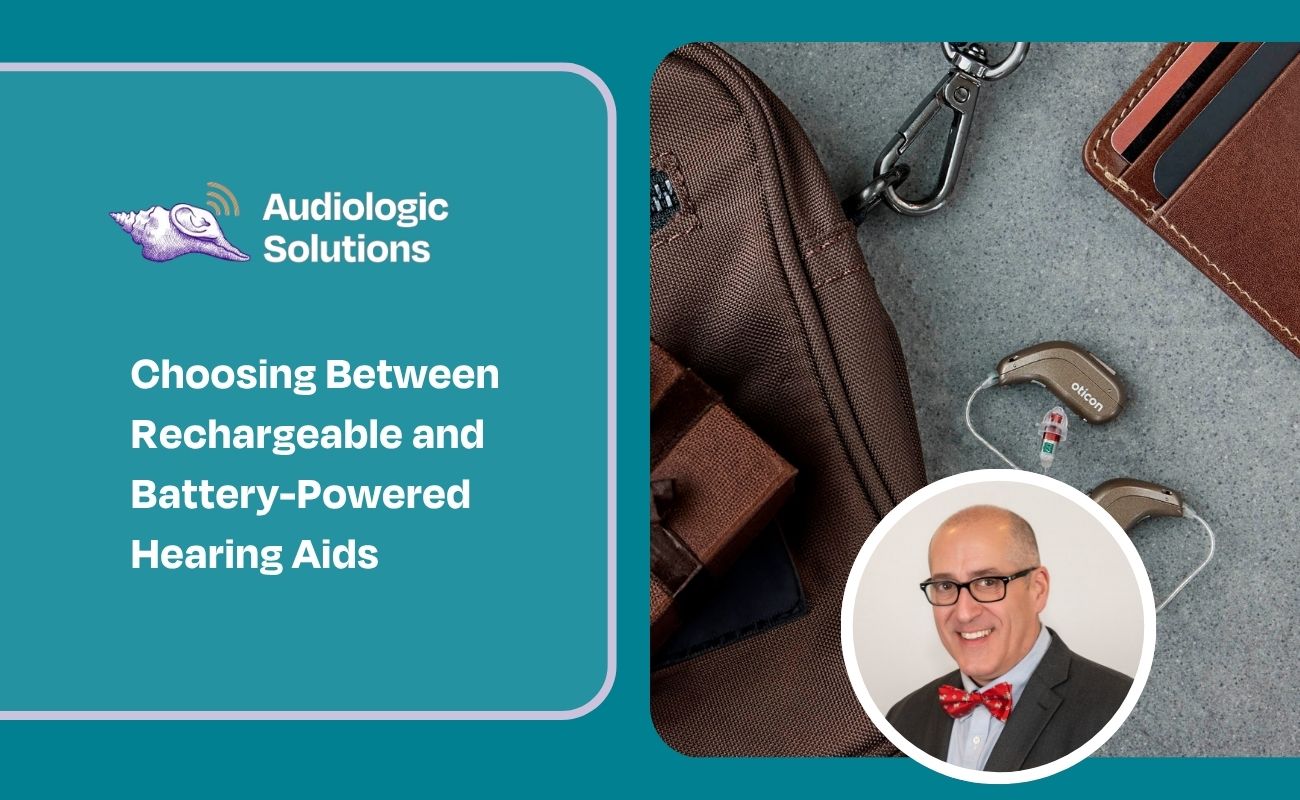

It's one of the most common questions we hear: should I go rechargeable, or stick with traditional batteries? Both options work well. The right choice just depends on how you live and what matters most to you. Here's an honest look at both.
For the majority of patients today, rechargeable hearing aids are the go-to choice. It's easy to understand why. You drop the devices in their charging case overnight, and by morning you're ready for a full day. No tiny batteries to buy, no fumbling with small compartments, no wondering if you packed spares.
Battery life has improved significantly. The Oticon Zeal and Oticon Intent both offer up to 20 hours on a single charge, with a quick-charge option that gives you 4 hours of power after just 15 minutes. The ReSound Vivia goes even further, offering up to 30 hours of standard use or 20 hours with streaming and AI features running. The Phonak Audéo Infinio delivers 16–18 hours per charge, and a 15-minute quick charge gets you 3 more hours.
For most people, that's more than enough for a full day, even with heavy streaming.
Here's something that doesn't get talked about enough. Hearing aid batteries are genuinely tiny, and handling them correctly takes some finger coordination. For anyone with arthritis, Parkinson's disease, neuropathy, or even general hand stiffness that comes with age, this can go from inconvenient to genuinely difficult.
When battery changes become a struggle, some people simply stop wearing their hearing aids. That's the worst outcome possible. Rechargeable devices snap in and out of their cases with minimal effort, removing that barrier entirely. If fine motor tasks are hard for you, rechargeable hearing aids are not just more convenient; they may be the better clinical choice.
Rechargeable isn't the right answer for everyone. If you travel frequently, especially internationally or to remote areas, disposable batteries offer something rechargeable devices can't match: you can always find more. A pack of size 312 or size 13 batteries fits easily in your carry-on and doesn't depend on an outlet or charging case.
If your checked bag gets delayed, if you're camping, or if you're somewhere with unreliable electricity, a battery-powered device means you're never stuck. That peace of mind is real and worth weighing.
Disposable batteries typically last 3–7 days depending on battery size and how much streaming you do. Larger batteries (size 13) outlast smaller ones (size 10 or 312). Keep in mind that the more features you use, such as Bluetooth, AI processing, and tinnitus programs, the faster any battery drains, regardless of type.
Some patients also just prefer the familiar. That's not a compromise. It's a legitimate preference, and we respect it.
If sustainability matters to you, rechargeable hearing aids do have a meaningful edge. Disposable hearing aid batteries contain zinc and other materials that shouldn't go in the regular trash, and many communities don't have easy recycling options for them. Switching to rechargeable cuts down on that waste considerably.
It won't be the deciding factor for everyone, but it's worth knowing.
Whichever option you choose, a little preparation goes a long way when you're on the road.
If you use rechargeable hearing aids, pack a portable charging case, as several brands offer them, and bring a universal travel adapter. Many major airports now have Auracast-compatible audio systems that work seamlessly with newer hearing aids, so it's worth downloading your airline's app before you fly.
If you use disposable batteries, keep a backup pack in your carry-on, not your checked luggage. Store batteries at room temperature; extreme heat or cold shortens their life noticeably.
At Audiologic Solutions, we carry a full range of rechargeable and battery-powered hearing aids from all the top brands. Our audiologists take the time to understand your daily routine, your lifestyle, and your priorities, including practical questions such as how you want to power your devices, before making any recommendation.
There's no universal right answer here. Some people love the simplicity of rechargeable. Others value the flexibility of disposables. The goal is finding what works for your hearing and your life, not just your audiogram.
If you're ready to explore your options, call us at (518) 267-7750 or stop by any of our four locations in Rensselaer, Hudson, Queensbury, or Saratoga Springs. We'd love to help.






.jpg)
We have 4 hearing care clinics in Rensselaer, Hudson, Saratoga Springs and Queensbury.


